For a long time, industry was viewed as incompatible with environmental requirements.
Water consumption, chemical discharges, industrial waste, energy footprint: these are real challenges, particularly in high-tech sectors such as microelectronics. Yet a new generation of manufacturers is demonstrating that it is possible to build high-performance production facilities while placing environmental responsibility at the heart of their business model—not as a constraint, but as a fundamental competitive advantage.
The ISO 14001 Standard
The ISO 14001 standard, an international framework for environmental management, has become a key benchmark for companies committed to this approach. It provides a structure for a rigorous process: identifying environmental impacts, setting reduction targets, and continuously improving processes. Increasingly, major contractors are incorporating it into their supplier qualification criteria, making certification a strong indicator of both industrial integrity and environmental commitment.
Environmental Commitment at the Heart of Our Industrial Operations
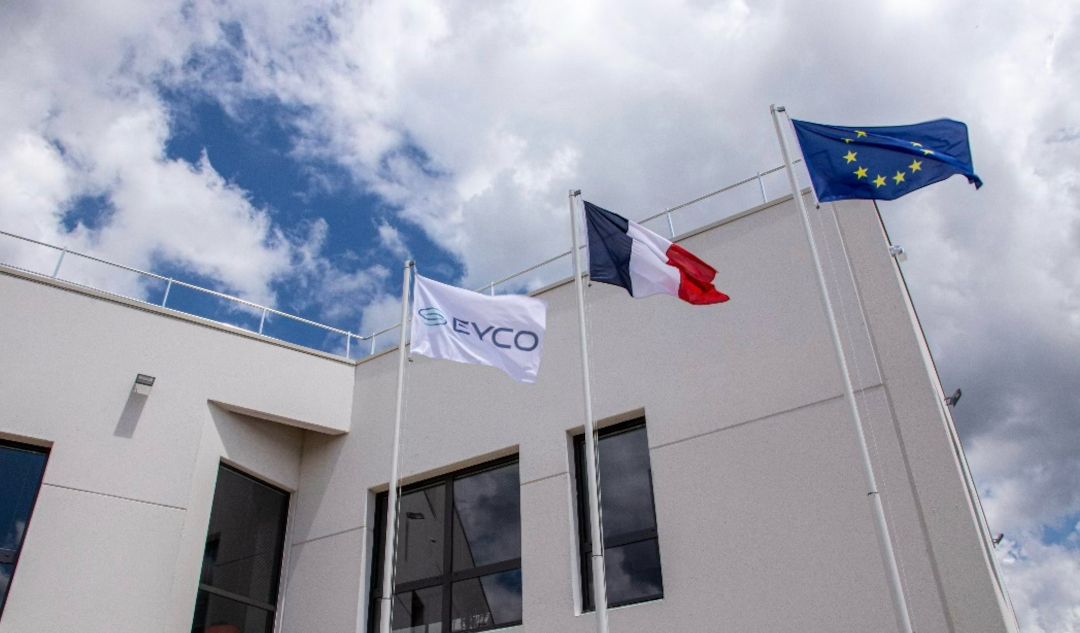
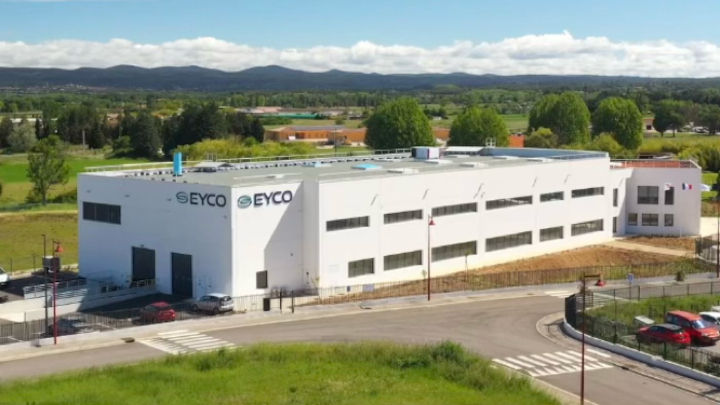
At EYCO, this commitment is not a recent development: it has been part of the company’s DNA since its founding in 2020. From the very beginning, the plant was designed to be a zero-discharge facility for industrial water—a rare achievement in the microelectronics industry. Industrial processes run exclusively on electricity, waste is minimized and recycled, and working with committed local service providers is part of our daily routine. In line with this commitment, EYCO obtained ISO 14001 certification in January 2025, which was renewed in February 2026.
The goal for 2027 is now to conduct the ISO 9001 and ISO 14001 audits simultaneously—an integrated approach that reflects the maturity of EYCO’s management system and its commitment to sustainable operational excellence.